Highway guardrails work in some of the most unforgiving environments imaginable. Positioned alongside busy interstates, winding mountain passes, and coastal highways, these steel barriers face non-stop exposure to harsh weather, tire debris, vehicle exhaust fumes, and de-icing chemicals. When a barrier corrodes, structural integrity weakens, putting drivers at serious risk and forcing highway authorities into costly repair cycles.
Long-term durability in road infrastructure requires raw materials built for constant abuse. Using hot dipped galvanized steel has become the gold standard for global barrier fabrication. Combining mechanical strength with active rust protection, hot dipped galvanized steel delivers safety performance that lasts decades while keeping total lifecycle costs surprisingly low.
Metallurgical Defense of Zinc-Iron Alloy Layers
Unlike conventional surface coatings that rely strictly on mechanical adhesion, hot dipped galvanized steel undergoes a true chemical transformation during fabrication. Submerging cleaned steel components into molten zinc baths near 450°C triggers an intermetallic reaction. Zinc fuses with iron to form distinct alloy layers topped with a pure zinc surface shell.
This metallurgical bond gives the material distinct mechanical advantages:
-
Impact Resistance: The zinc-iron intermetallic layers are actually harder than the base steel itself, providing extreme resistance to stone impacts, installation scrapes, and maintenance tool abrasion.
-
Barrier Protection: The dense outer surface acts as an impenetrable shield, preventing moisture and oxygen from reaching the underlying steel core.
-
Sacrificial Cathodic Protection: If road debris chips the outer surface, the surrounding zinc corrodes preferentially. It sacrifices itself to protect any exposed bare steel underneath.
-
Self-Healing Capabilities: As the zinc sacrifices itself, natural zinc carbonate compounds form over minor surface scratches, effectively sealing the wound against further rusting.
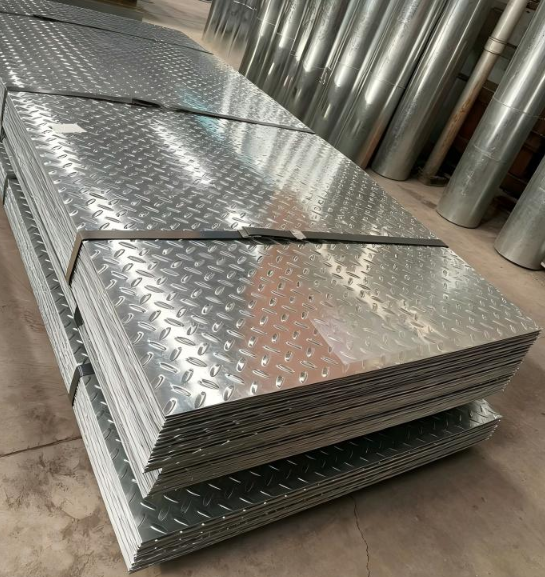
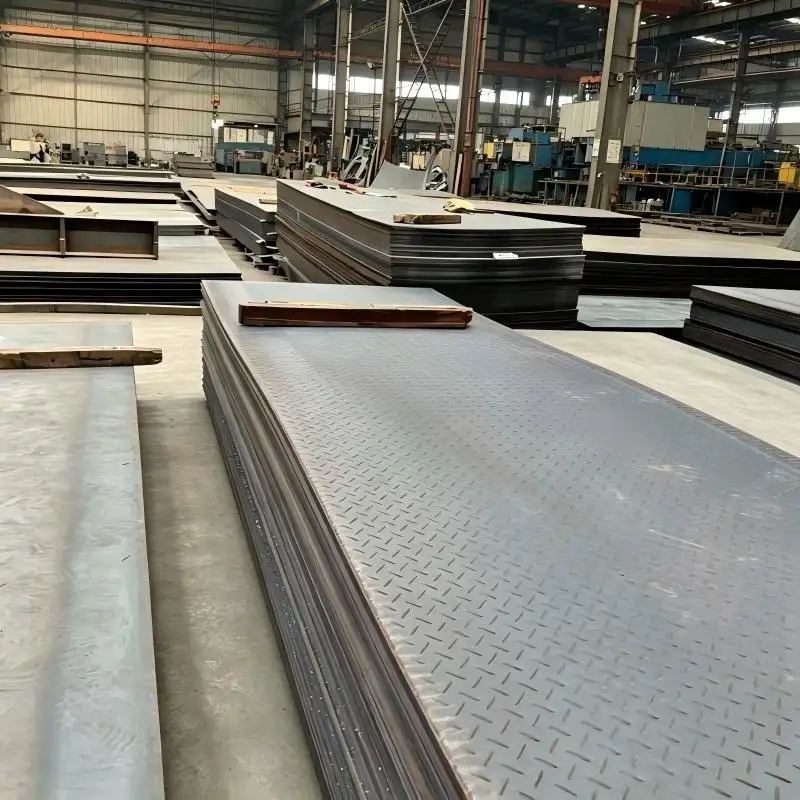
Using a hot dip galvanized checkered plate in nearby pedestrian walkways, service platforms, or structural bridge attachments brings these exact same protective qualities, plus a raised patterned surface that boosts foot traction.
Coating Thickness and Field Life Expectancy
The service life of hot dipped galvanized steel corresponds directly to its total zinc layer thickness. Standard international specifications require specific coating weights tailored to target operating environments.
In clean rural environments, zinc wears away slowly at roughly 0.5 to 1.0 microns per year. Industrial corridors see consumption rise to 1.5 to 4.0 microns annually, while salty coastal atmospheres consume 2.0 to 5.0 microns per year.
| Environment Type |
Annual Zinc Corrosion Rate |
85μm Coating Service Life |
| Clean Rural Environment |
0.5–1.0 μm/year |
50–70 years (maintenance-free) |
| Industrial Corridor |
1.5–4.0 μm/year |
— |
| Coastal / Marine Atmosphere |
2.0–5.0 μm/year |
25–40 years |
Specifying an 85-micron zinc layer provides 50 to 70 years of maintenance-free service in inland regions and 25 to 40 years along marine corridors. This easily exceeds the standard 20-year design life of typical highway safety systems. Applying a hot dip galvanized checkered plate with equal coating specifications ensures auxiliary access paths remain equally durable over time.
Real-World Highway Infrastructure Case Study
Performance tracking across busy transport corridors highlights the practical financial value of hot-dip galvanizing over traditional liquid paint systems.
A comprehensive field review evaluated hot dipped galvanized steel barriers installed along a 180-kilometer expressway section running near industrial hubs and coastal zones. After 12 years of continuous service, technical measurements showed:
-
Remaining Coating: Average zinc thickness measured well over 65 microns, showing minimal yearly loss even near marine air currents.
-
Predicted Lifespan: Projections indicate the barrier network will remain rust-free for another 23 years, achieving a total service life over 35 years.
-
Zero Maintenance: The galvanized section required no touch-ups, repainting, or surface washing over the entire 12-year window.
By contrast, an adjacent highway section using painted steel guardrails showed visible rust along 15% of its surface after just 8 years. Repainting costs averaged nearly $45,000 per kilometer, creating traffic delays and recurring maintenance expenses.
Key Manufacturing Requirements for Guardrail Fabrication
Achieving optimal performance from hot dipped galvanized steel requires precise manufacturing controls before and during the dipping phase:
-
Substrate Silicon Control: Silicon levels in the base steel influence zinc reaction speed. Steel with silicon between 0.04% and 0.15% can form overly thick, brittle coatings. Specifying low-silicon steel under 0.04% yields smoother, more ductile protective layers.
-
Fabricate Before Dipping: Punching mounting holes, welding brackets, and forming W-beam shapes must take place prior to hot-dip processing. Welding galvanized parts afterward damages the protective shell, forcing technicians to use zinc-rich spray touch-ups.
-
Proper Venting and Drainage: Tubular posts and complex shapes require strategically placed vent holes. Proper venting allows air to escape so liquid zinc flows evenly inside every cavity and drains cleanly during removal.
-
Accurate Thickness Inspections: Measuring finished components with magnetic gauges ensures compliance with ASTM and EN standards across every batch.
Environmental and Economic Advantages
Selecting hot dipped galvanized steel over conventional paint systems offers measurable environmental and financial benefits:
-
100% Recyclability: Zinc and steel can be melted down and reused infinitely without losing physical properties.
-
Lower Carbon Footprint: Life-cycle studies show hot-dip galvanizing generates 30% to 40% fewer carbon emissions over a 50-year lifespan compared to painted barriers requiring periodic repainting.
-
Lower Total Ownership Cost: Although hot dipped galvanized steel carries a 10% to 20% higher upfront purchase price than painted alternatives, avoiding recurring repainting cycles slashes total 30-year lifecycle costs by up to 35%.
Sourcing Quality Materials for Infrastructure Projects
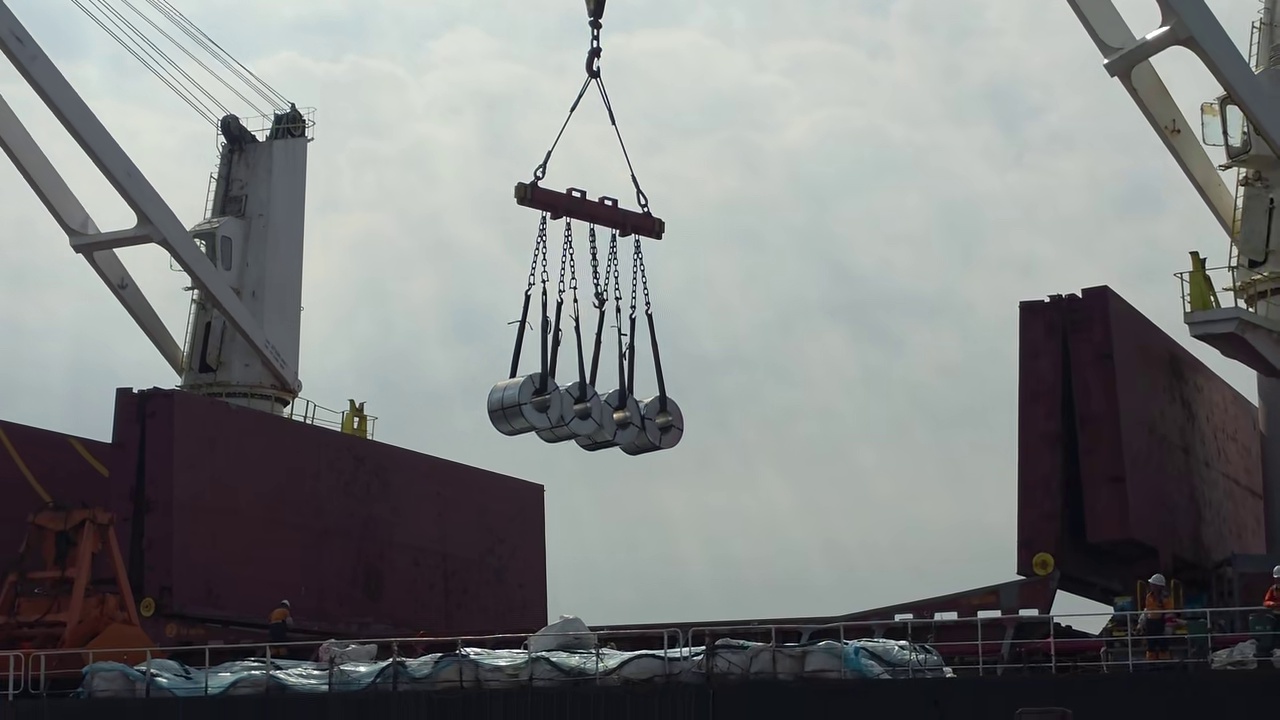
Building safe, long-lasting highway networks depends on sourcing certified steel components from reliable supply partners. Yuanhe Steel supplies high-performance hot dipped galvanized steel and hot dip galvanized checkered plate products conforming to rigorous international standards like ASTM, EN, and GB/T. Managing everything from raw steel sourcing and processing coordination to ocean freight logistics, Yuanhe Steel helps infrastructure contractors and barrier manufacturers deliver safe, maintenance-free highway guardrails built to last for generations.
 EN