What Storage Conditions Keep Hot Rolled Steel Coil Free from Oxidation?
Preventing surface degradation is one of the most critical challenges in metal logistics and warehousing. When dealing with raw carbon or alloy steel, moisture and fluctuating temperatures are the primary catalysts for red rust and black scaling. Maintaining pristine hot rolled steel coil stock requires precise environmental engineering, disciplined warehouse management, and adherence to rigorous international standards such as ISO 9001 and ASTM packaging guidelines. In this article, we break down the exact technical storage conditions required to keep hot rolled steel coil completely free from oxidation, minimizing scrap rates and preserving downstream fabrication quality.
Critical Environmental Parameters: Humidity and Temperature Control
The fundamental rule of stopping steel corrosion in a warehouse is controlling the dew point. If the surface temperature of a hot rolled steel coil drops below the dew point of the surrounding air, moisture will instantly condense on the metal.
-
Relative Humidity (RH): The ambient relative humidity inside the storage facility must be strictly maintained below 50%. In coastal regions or high-precipitation climates, industrial dehumidifiers and HVAC climate control systems are mandatory.
-
Temperature Stability: Rapid thermal swings cause "sweating." When cold coils are moved into a warm, humid bay, condensation forms immediately. Warehouses should maintain stable indoor temperatures, ideally between 15C and 25C, with daily fluctuations kept to an absolute minimum.
-
Air Circulation: Stagnant air pockets trap moisture. Strategic positioning of overhead industrial fans ensures continuous air exchange without introducing external untreated air or contaminants.
| Environmental Parameter |
Optimal Range |
Critical Danger Threshold |
Corrective Action |
|
Relative Humidity
|
40% - 50%
|
Above 60%
|
Deploy desiccant systems / Industrial dehumidifiers
|
|
Warehouse Temperature
|
15C - 27C
|
Rapid swings (>5C/hour)
|
Insulate facility walls; use climate zoning
|
|
Dew Point Margin
|
Coil temp > Dew point by 3C
|
Coil temp <= Dew point
|
Heat coils prior to unsealing; seal entry doors
|
Advanced Packaging and VCI Barriers for Long-Term Storage
Even with optimal warehouse conditions, bare metal is vulnerable to airborne pollutants and residual moisture. Implementing multi-layered packaging protocols is essential for protecting a hot rolled steel coil during extended storage periods or prior to transit.
Modern anti-corrosion packaging relies heavily on Vapor Corrosion Inhibitors (VCIs). VCI films release invisible, non-toxic rust-inhibiting molecules that form a microscopic protective layer on the steel surface. When wrapping a steel coil oxidation is prevented by sealing out oxygen and moisture vapor entirely.
-
Layer 1: Neutral Barrier Paper: Placed directly against the steel surface to absorb any minor residual moisture and prevent direct contact with plasticizers.
-
Layer 2: VCI Polyethylene Film: Extrudes active vapor inhibitors that neutralize corrosive ions in the micro-environment inside the package.
-
Layer 3: Woven HDPE Outer Wrap: Protects against physical punctures, forklift damage, and ultraviolet degradation during handling.
-
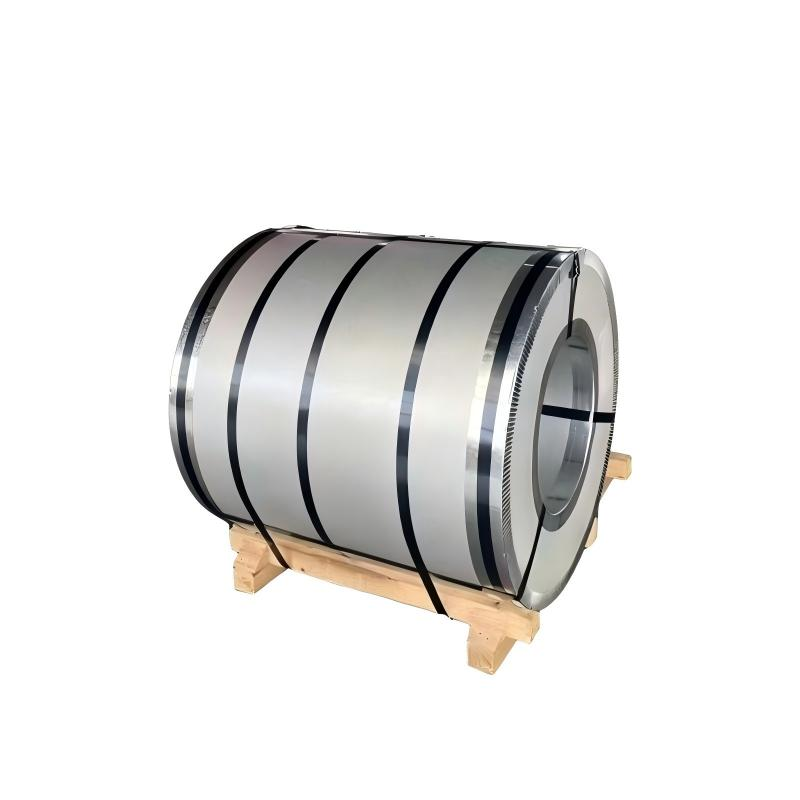
Edge Protectors: Heavy-duty corrugated or steel edge protectors safeguard the vulnerable outer and inner diameters of the hot rolled steel coil from mechanical impact, which often breaches the moisture seal.
Proper Racking, Stacking, and Floor Elevation Techniques
Physical storage methods are just as important as climate control. Improper stacking can introduce mechanical stress, deform the geometry of the hot rolled steel coil, and create micro-cracks where moisture can pool and accelerate localized pitting.
-
Elevation from Subfloor: Concrete slabs absorb ground moisture through capillary action. Coils must never be placed directly on bare concrete. Wooden dunnage, rubber saddles, or steel cradles lined with moisture-barrier mats must elevate the cargo by at least 150mm.
-
Stacking Configuration: Depending on weight and mill guidelines, heavy coils are generally stored in eye-horizontal positions on specialized heavy-duty racks or in eye-vertical setups using timber wedges to prevent rolling. Single-tier stacking is preferred for sensitive inventory, though verified heavy-duty racking systems can safely accommodate two tiers if weight limits are strictly observed.
-
Proximity to Openings: Avoid placing inventory near loading dock doors, unsealed windows, or direct ventilation louvers where rain mist or fluctuating outdoor air can blow directly onto the metal surface.
Factory Quality Control, Inspection, and Maintenance Protocols
Maintaining zero oxidation starts before the material even enters long-term inventory. As part of comprehensive supply chain transparency—similar to the rigorous material standards practiced at Yuanhe PPGI—incoming batches undergo stringent quality audits.
-
Mill-Edge and Surface Inspection: Coils must be inspected for existing mill scale, trapped pickling acids, or oil residues upon arrival. Residual rolling oils left unmanaged can oxidize or react adversely with packaging materials.
-
Periodic Inspection Schedules: Warehouse personnel should conduct weekly spot-checks using digital hygrometers and surface moisture meters. Any package showing tears in the VCI wrap must be immediately unsealed, inspected, dried, and re-packaged.
-
First-In, First-Out (FIFO) Management: Carbon steel has a finite storage window even under ideal conditions. Establishing a strict FIFO rotation ensures that inventory does not sit dormant for extended periods, reducing the cumulative risk of steel coil oxidation.
By combining precise climate control, advanced VCI wrapping technology, professional warehouse racking, and stringent inspection routines, industrial buyers and stockists can guarantee that every hot rolled steel coil remains pristine, ductile, and entirely free from oxidation.
 EN