EN

Cur bobina ferri Galvalume resistit pulveri salino melius quam bobina galvanizata
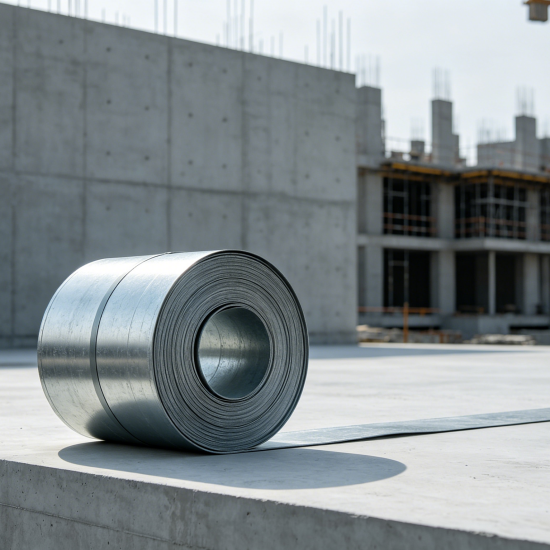
As a procurement engineer who has specified coated steel coils for roofing and cladding projects in coastal West Africa, South America, and the Gulf region, one pattern I have noticed repeatedly is this: teams that specify standard galvanized coil for marine-adjacent applications typically revisit that decision within two or three years. The rust spots appear first at the cut edges, then spread across the flat panels. What looked like a cost-effective choice at the quotation stage becomes a warranty problem in the field.
The underlying issue is not poor manufacturing — it is a mismatch between coating chemistry and environmental demand. If you are sourcing steel coil for any project within roughly 10–15 kilometres of a coastline, or for structures exposed to industrial salt-spray environments, understanding the performance difference between coil Aci Galvalume et la bobine galvanisée standard n’est pas une commodité technique. C’est une décision critique pour l’approvisionnement.
Qu’est-ce que la bobine en acier Galvalume ?
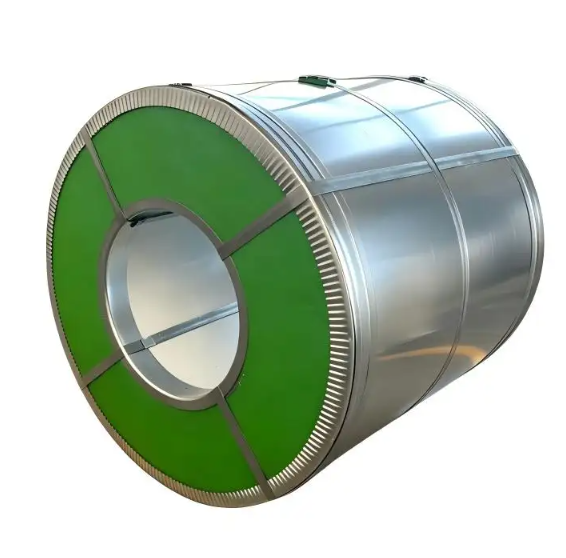
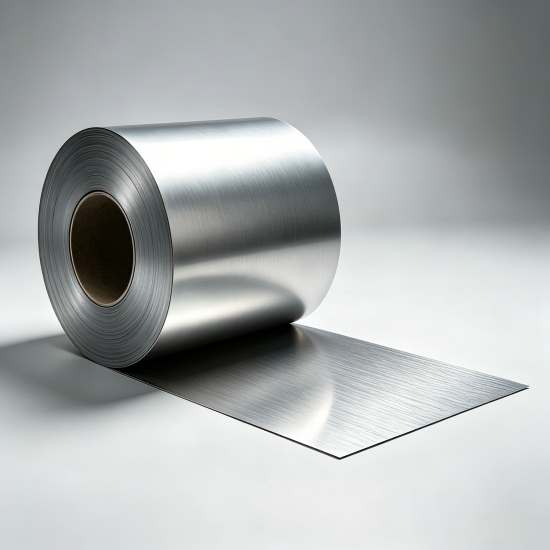
Le Galvalume est un produit en acier revêtu continuellement par immersion à chaud, dont le revêtement se compose de 55 % d’aluminium, 43,5 % de zinc et 1,5 % de silicium en masse. Ce produit a été initialement développé par Bethlehem Steel en 1972 et est désormais régi par la norme ASTM A792 en Amérique du Nord, avec des spécifications équivalentes selon les normes JIS G3321 et EN 10346 sur d’autres marchés.
À l’échelle internationale, la désignation AZ150 est la plus couramment spécifiée, indiquant un poids total minimal de revêtement de 150 g/m² (les deux faces confondues). Des grades plus épais, tels que AZ185, sont disponibles pour des environnements plus agressifs. L’alliage à trois composants n’est pas un simple mélange : l’aluminium et le zinc interagissent de façon à offrir deux mécanismes de protection distincts agissant conjointement.
Qu’est-ce que la bobine en acier galvanisé standard ?
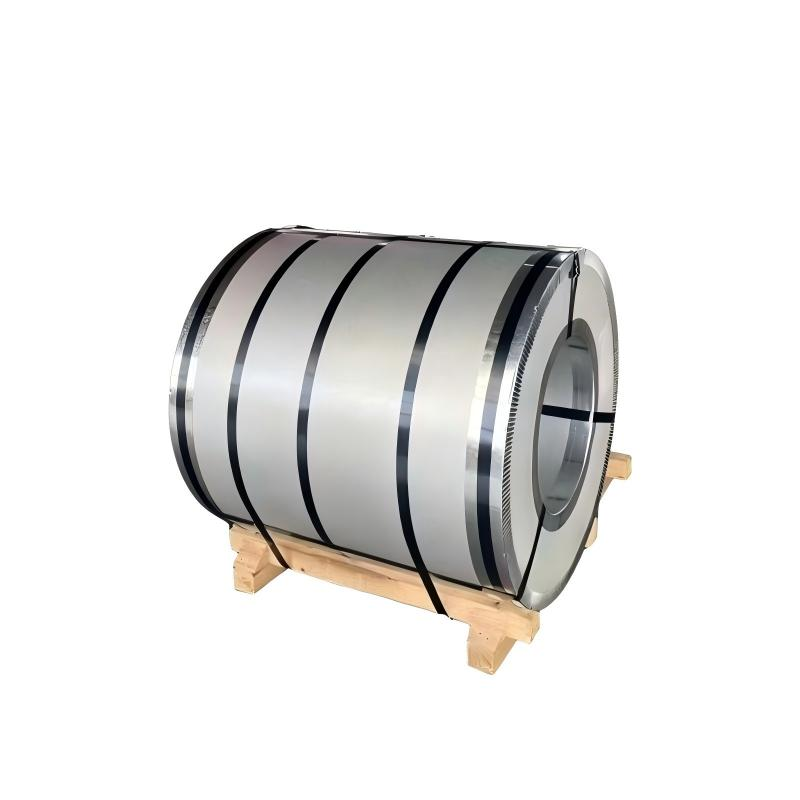
Galvanized steel coil — often abbreviated as GI coil — uses a pure zinc coating applied by hot-dip galvanizing, governed by ASTM A653 (G designation in North America) or EN 10346 (Z designation in Europe). Common specifications include Z275 (275 g/m²) and Z180 (180 g/m²), with Z90 and Z120 used for lighter-duty or interior applications.
Zinc is an excellent galvanic protector. When bare steel is exposed at a cut edge or scratch, zinc sacrifices itself to protect the underlying substrate — a well-understood electrochemical mechanism that gives galvanized coil its long track record in building and construction. Galvanized coil is not a poor product; it is appropriate for many inland and low-humidity environments. The limitation emerges when chloride ion concentration in the environment increases — which is exactly what happens at coastlines and in salt-spray industrial zones.
The Core Performance Difference in Salt Spray Environments
Sub ASTM B117 neutralis salis nebulae (NSS) experimenti condicionibus — quae est norma laboratorii pro accelerata corrosionis aestimatione — differentia inter galvalume et zincatum laminam clare mensurabilis fit.
| Parametrum | Galvalume Steel Coil (AZ150) | Zincata Lamina Ferrea (Z275) |
|---|---|---|
| Compositio tectorii | 55% Al, 43.5% Zn, 1.5% Si | ~100% Zn |
| Norma Regulans | ASTM A792 / EN 10346 | ASTM A653 / EN 10346 |
| ASTM B117 planae tabulae praestatio (indicativa) | Saepius superat 1 000–1 500+ horas antequam rubra rusta appareat | Saepius 500–1 000 horas antequam rubra rusta appareat, ad aequalem tegimenti gravitatem |
| Mechanisma Protectorum Primarium | Aluminii barriera + zinci protectio galvanica | Zinci protectio galvanica |
| Cut-edge behavior | Zinc phase provides galvanic protection at exposed edges | Zinc provides galvanic protection, but depletes faster in high-chloride environments |
| Relative corrosion resistance (laboratory salt spray) | Approximately 2–4× higher than Z275 galvanized | Baseline reference |
These numbers require a brief qualification. Salt spray test hours are a relative ranking tool, not a direct predictor of service life in years. A material that performs well in ASTM B117 does not necessarily maintain that advantage in all real-world conditions — the test accelerates corrosion under controlled circumstances that rarely match field complexity. What the data does confirm is that galvalume Coil consistently outranks galvanized coil of comparable weight in chloride-exposure tests, and that advantage is reproducible across independent test laboratories and international standard specifications.
Why the Dual-Mechanism Coating Matters
Causa pro qua galvalume steel coil superat galvanized in salt spray est chemia coating. Standardis galvanized coil pendet tota ex galvanico comportamento zinci — zincum est electrochimice activum respectu ferri, ideo praeferenter oxidadum est et substratum protegit. Hoc mechanismum bene operatur, sed in ambientibus altis chloridi zincum cito consumitur. Cum stratum zinci ad minimam criticam crassitudinem depleverit, corrosio ferri subiacentis accelerat.
Galvalume’s aluminum content adds a second protective mode: barrier protection. The aluminum forms a stable, adherent oxide layer that physically blocks chloride ions from reaching the steel substrate. Aluminum does not offer the same galvanic protection as zinc — it is not sacrificial in the same electrochemical sense — but it resists dissolution in saline environments far better than zinc does. The 1.5% silicon in the coating acts as an adhesion promoter, preventing coating delamination during forming and handling.
In praxi, cum bobina galvalume ad spumas salinas litoralis exponitur, stratum aluminium retardat penetrationem chloridorum, dum phase zinci protectionem galvanicam praebet in marginibus sectis vel defectibus superficialibus expositis. Haec duo mechanismi sese mutuo complent modo, quo nec zincum solum nec aluminium solum imitari potest. Ingeniarii periti in emptionibus, qui in proiectis prope litora aut in industrialibus ambientibus onustis sale laborant, saepe initium suae specificandi rationis faciunt definientes classim expositae chloridorum, deinde retrocalculant utrum AZ150 sufficiat an AZ185 requiratur — non autem ad minimum pondus revestimenti pretio minimo disponibile recurrunt.
Quando Galvalume Bobinam versus Bobinam Galvanizatam Specificare Oportet
It would be inaccurate to say galvalume is the right choice in every case. Galvanized coil remains cost-effective and appropriate in a range of applications — particularly inland, moderate-humidity environments where chloride ion concentration is low. The premium for galvalume over equivalent galvanized typically runs 5–15% depending on specification and market, and that premium is not uniformly justified for interior steel framing, protected substructure components, or short-lifecycle temporary structures.
Where galvalume steel coil becomes the more defensible specification decision:
- Coastal et marine environments: Any roofing, wall cladding, or structural application within 15–20 km of a saltwater coastline. This is the primary driver for switching from galvanized to galvalume in markets across West Africa, coastal South America, and Southeast Asia.
- Industrial salt-spray environments: Facilities near chemical plants, salt-processing operations, or saline-water cooling towers where airborne chloride levels are elevated regardless of distance from the ocean.
- Long-lifecycle projects: Buildings with 20–30+ year design lives where the cost of early re-roofing or re-cladding from corrosion-related failure would significantly exceed the coating premium at purchase.
- Pre-painted galvalume (PPGL): Cum painted galvalume coil — also called PPGL — is specified for both corrosion protection and color retention; the galvalume substrate provides a more stable base for the paint system in aggressive environments than a galvanized substrate would.
Un error comun in li selectione de specificationes es li election de standard GI coil con un peso de recubrimente Z120 o Z180 pro li tectos de magasines o fabricas in zonas costeras del Africa tropical. In atmospheres con alt umiditate e sal, iste peso de recubrimente es frequentemente insufficiente, e li rusta visible que se developa intra duo a tres annos post li installation es totalmente previsibile ex li specification del recubrimente — non un defectu de qualitate in li sensu del fabrication, ma un mismatch in li selection del material.
Selection de un fornitor de Galvalume Steel Coil
Postquam decisiō dē specificandō galvalumē facta est, quaestio qualificātiōnis suppeditātōris magnī momentī est. Praecipuī parametrī quī ab omni suppeditātōre confīrmāndī sunt: designātiō cōātūrae (AZ150 vērsus AZ185), norma applicābilis (ASTM A792 aut aequivalēns), methodus examinātiōnis ponderis cōātūrae et tolerantia, atque utrum reportātiōnēs examinātiōnis fabricae (MTR) pro singulīs numerīs calorīs bobinae praebentur. Inspectiō tertiī partis ante expōrtātiōnem per SGS, BV, aut aequivalēns ad verificandum pondus et spēssitūdinem cōātūrae prāctica communis est pro ordinibus prīmārum containerum et in planum comparationis inserenda est.
Ad emptōrēs qui ā fābricīs Sinicīs emunt — quae pars magnā globālis suppeditātiōnis coil galvalumē repraesentant — verificāre oportet ut fābrica certificātum ISO 9001 habeat et reportātiōnēs examinātiōnis fabricae (MTR) praebēre possit quae ad specifīcōs numerōs calorīs referant. Haec trācēbilitās importāns est si umquam post installātiōnem clāmātiō qualitātis necessāria sit.