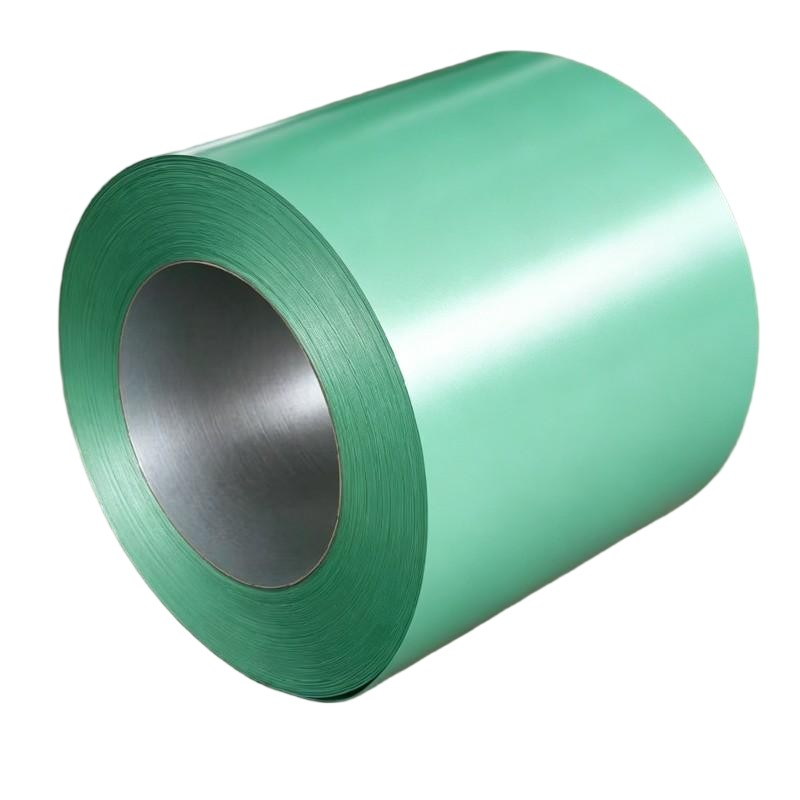
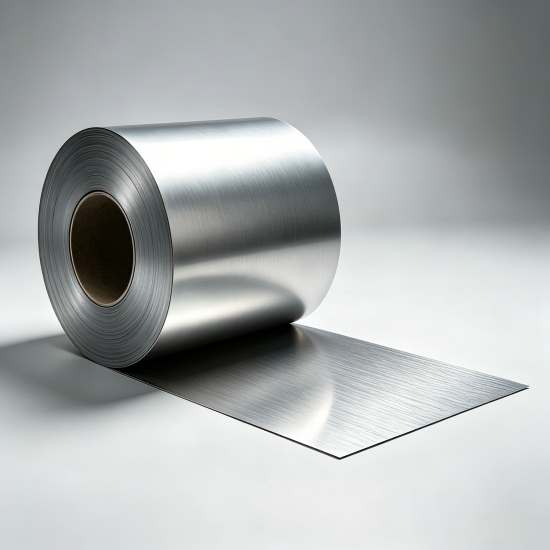
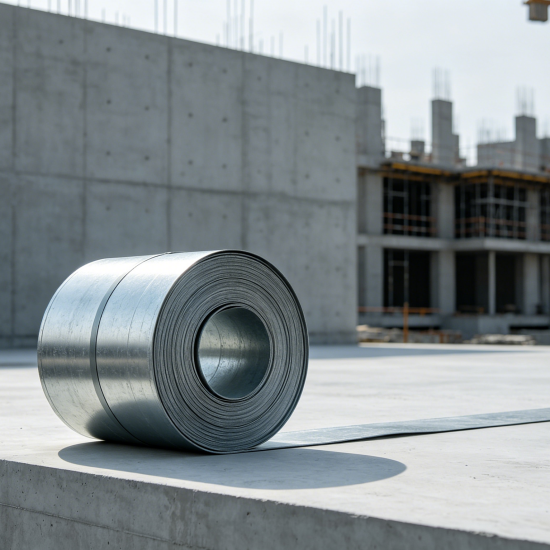
Can a standard PPGI coil really become the embossed decorative panels used on ceilings, doors, elevators and appliance fronts? The short answer is yes — and it happens every day. Embossing presses a pattern into colour coated steel coils after painting, turning a flat surface into a textured one that hides fingerprints, dents and micro-scratches while adding rigidity. But success depends on paint system, pattern depth and base material choices made long before the coil ever reaches the embossing roller. This article explains how the conversion works, what can go wrong, and a case study from a project we supplied, so you can specify embossable PPGI coil with confidence.
What Embossing Does to Colour Coated Steel Coils
Embossing est formatio frigida in superficie. Duo rotae — una superior incisa et una inferior lisa — comprimunt laminam dum transibit, elevantes figuram quae saepe 0.1–0.3 mm profunda est. Quoniam pellicula picturae tantum 20–25 micra crassa est, figura vere formatur in ipsa pellicula et in substrato ferreo simul. Ideo flexibilitas picturae magis importat quam durities. Pelliculae polyesterae (PE) bene embossantur; systemata PVDF altae durabilitatis etiam patiuntur figuras subtilis, sed texturae valde profundae omnes pelliculas possunt distendere et microfissuras in apicibus figurarum causare. Stratum zinci subter — Z20 usque ad Z275 in substratis ut ASTM A653, JIS G3302 SGCC aut DX51D+Z — cum ferro deformatur et protectionem contra corrosionem continuam servat. Crassitudo etiam importat: 0.3–0.8 mm PPGI coil est optima ratio pro tabulis parietum et tecti, dum supra 1.0 mm pressio embossandi subito crescit et figurae definitionem in marginibus amittunt.
Studium Casus: 8 000 Metra Quadrata Tabularum Tecti Embossatarum
Background. A fit-out contractor in Central Asia needed 8,000 square meters of embossed ceiling and wall panels in warm white. The architect had specified a fine linen texture to hide surface wear in busy corridors, and the contractor initially assumed they needed imported aluminum composite — until the budget review.
Challenge. Three risks came with switching to steel: pattern consistency from coil to coil, color matching between embossed and flat panels installed in the same rooms, and paint integrity after forming.
Solution. We supplied PPGI coil at 0.5 mm with Z275 coating and a PE paint system validated for embossing. Before mass production, the processor embossed 50-meter samples and we measured gloss and color on embossed versus flat areas — gloss drops several points after embossing, so the paint supplier adjusted the base tone slightly to compensate. The ceiling line slit the coil to 620 mm, embossed it with a 0.15 mm linen pattern, cut panels to size and formed the edge folds.
Result. Installation finished with a panel reject rate under 0.8 percent, mainly edge damage during handling rather than pattern defects. Three years on, the ceilings show no visible fading or paint cracking according to the contractor's follow-up. The switch from aluminum composite to embossed PPGI cut material cost by roughly 30 percent — the number that convinced their procurement director to repeat the specification on two later projects.
Checklist for Specifying Embossable PPGI Coil
If you are converting a panel design from aluminum composite or plain sheet to embossed steel, work through this list before ordering:
- Paint system: choose PE or modified PE for standard interior panels; use SMP or PVDF only if exterior exposure and texture are both required — and test pattern depth on samples first.
- Film thickness: keep the top coat at 20 microns minimum; thinner films show pattern peaks as pale highlight lines.
- Substratum: crassitudo 0.3–0.8 mm; zinc Z60–Z275 pro interioribus siccis, zinc Z275 pro interioribus humidis vel litoralibus (exempli gratia, in aedibus natandi).
- Profunditas figurarum: 0.1–0.2 mm pro mobilibus et instrumentis, usque ad 0.3 mm pro tabulis architectonicis; figuris profundioribus necessaria est lamina ferrea crassior.
- Protocollo exemplorum: pete exempla 3–5 metrorum a vero coetu productionis; deinde colorem inspice sub luce diei et sub lumine LED.
- Ordo formandi: una cum tuo processore decerne utrum imprimere ante an post sectionem facias; si post sectionem imprimeris, ordo figurarum super marginibus tabularum purior manet.
- Pellicula protectiva: ordina bobinam aut tabulas cum pellicula protectiva PE laminata; superficies texturatae facile maculantur dum in transitu sunt.
Quaestiones et responsa de accipitro ferreo praepicto
Q1: Imprimere picturam in bobina PPGI infirmat?
It stresses the film, but it does not weaken it when depth and paint system are matched. Elongation at a 0.15 mm pattern is well within what PE and PVDF films tolerate. Problems appear when deep patterns meet thin, brittle films — micro-cracks form at the peaks and show as pale lines. A sample emboss run costs little and removes the risk entirely.
Q2: Can both sides be embossed?
Usually only the visible face is patterned. The reverse side stays smooth with primer or a backing coat. Double-sided embossing exists for specialty products, but it doubles roller cost and doubles the chance of back-side marking against the backup roll, so most processors avoid it unless the application truly shows both faces.
Q3: Is embossed PPGI more expensive than plain colour coated steel coils?
Spiralis ipsa est PPGI communis; pretium in passu embossandi consistit – typice additamentum modicum per metrum quadratum, plus incisio cylindri si paternum est ad usum specialem. Paterne communes, ut linum, granulatio corii et texturae geometricae, cylindros iam existentes utuntur. Logotypa vel texturae ad usum specialem cylindrum incisum exigunt, quod rationem habet supra circiter 5 000 metra quadrata tabularum.
A Spirali ad Tabulam Decorativam in Una Catena Sumptionis
Transformare bobine PPGI in tabele decorativae est un processus qui implicat atque oeconomicam catenae aprovizionarii, atque technicam: qualitas bobinae, latitudo sectionis, embossing et longitudo praecisa debent ordinari iuste. Fornitores qui habent magnum inventarium bobinarum coloratarum ex aere et eas ipsi tractant — sectionem, planationem, praecisionem — breviorem faciunt hanc catenam valde. Shenyang Yuanhe Steel sustinet exacte hunc modum operandi ab sua sede in Liaoning, cum plus quam 10 000 tonnis inventarii bobinarum PPGI, PPGL et galvanizatarum, inspectione tripartita et tempore tractationis inter 6 et 14 dies, mittens bobinas iam aptas ad embossing ad fabricantes tabularum per totam Asiam Sudorientalem, Mediam Orientem, Asiam Centralem et Americam Meridiemalem.
 EN